Colour is only one part of the assessment
The repaired area should blend in with its surroundings, but a matched shade does not answer the question of how the new layer will bond with the existing coating. In preparations for the Panel Montage training with Pro-Painter, the appearance of the repair was matched sooner than a satisfactory adhesion result was achieved. This is a practical reason not to start the conversation with the RAL number alone.
For the owner of an industrial building, this means something simple: it is worth agreeing both the expected visual result and how the substrate will be assessed. A similar colour is no substitute for information about the coating type, previous touch-ups or the nature of the damage. This data helps determine what needs to be checked before materials are chosen.
The two faces of a panel can behave differently
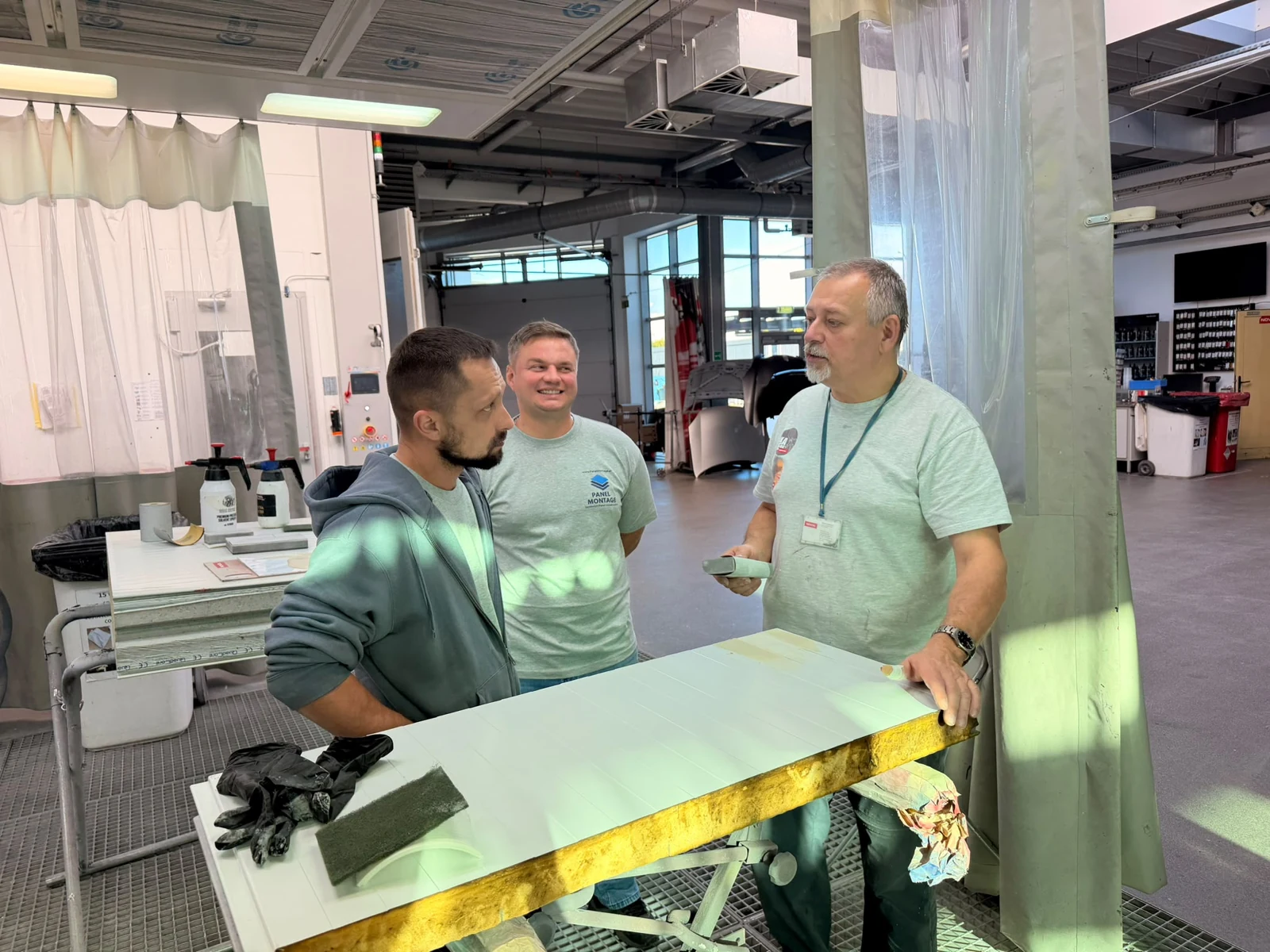
In the tests carried out by Pro-Painter, the two faces of the panels supplied reacted differently to preparation and painting. On one face, a good result was achieved with several variants. On the other, some of the methods tested did not provide the expected adhesion. A similar surface appearance was therefore not a sufficient basis for applying an identical procedure.
This describes specific samples, not a ranking of panel brands or a ready-made technology for all facades. Your enquiry requires identification of the actual product: the manufacturer, the panel face, the factory coating and the condition of the repair area. If you have the delivery specification, the relevant extract can make the assessment much easier.
What did the adhesion test show?
The tests used the cross-cut adhesion test. After the preparation of the problematic surface was changed, the report recorded a good result for the selected variant. The conclusion for the repair process is specific: an assessment of appearance should be supplemented by checking how well the materials bond, rather than treating a freshly painted area as conclusive proof of quality.
The result of such a test relates to the system and conditions tested. It is not, on its own, confirmation of long-term durability on every building. That is why we describe what the test covered and establish the result on a specific panel separately. The training documentation shows a stage in developing the method; it does not replace the agreed scope of your order.
Cleaning and improving adhesion are different tasks
Removing soiling and preparing the surface to bond with the next layer are separate matters. For example, Sika describes Aktivator-205 as an adhesion promoter, not a cleaning agent. The data sheet requires trials on actual substrates and relates the product to preparation before specific adhesives and sealants. It is not a general instruction for painting sandwich panels.
We cite this data sheet to show the importance of a product’s intended use. A product should not be chosen just because its name appears alongside a successful test. The right solution must take into account the whole set of materials and the recommendations for the specific application. This part is decided by the contractor; the client does not need to source any chemicals before submitting an enquiry.
Source 1Gloss, substrate and materials must be considered together
The data sheet for Spectral 2K enamel separates substrate preparation, component selection and application conditions. It also points to the need for a trial application because materials behave differently. It is a document for a specific paint system, not confirmation that it is suitable for every factory coating.
When discussing the repair, let’s establish whether it involves a single mark, several areas or a larger surface. We will also ask about any previous painting. A layer left by a previous repair may mean a different substrate from the one described in the original panel documentation. Photos help collect information; where the surface condition is unclear, the next step may be a site survey or an agreed trial.
Source 2How do you prepare an assessment for your building?
Send a photo of the whole panel and a close-up of the damage. Add the town, the number of areas, the approximate age of the envelope and any available product and colour references. State whether the surface has already been cleaned, repaired or painted. You don’t need to identify the resin type or carry out adhesion tests yourself.
Panel Cure+ collects this information to establish the further scope of the assessment and the possible course of action. Before the work is carried out, we agree the scope of work and the expected result. This way, the conversation is about your panel and the conditions on site, not just the phrase “paint in the same colour”. Start by showing the area that needs attention.
Sources and scope of information
Checked on 24 October 2026. Based on the sources listed below. This educational content was prepared by Panel Montage. The procedure depends on the specific panel, coating, damage and manufacturer’s recommendations. This article is not an individual repair assessment or an instruction for working at height.
Let’s start with photos
Show us the damage.
Let’s agree the next step.
Prepare a view of the whole panel, a close-up of the damage and the site location. If you know the manufacturer, coating type or RAL reference, add this information.
Prepare a repair enquiryTalk to the team