1. Name what you can actually see
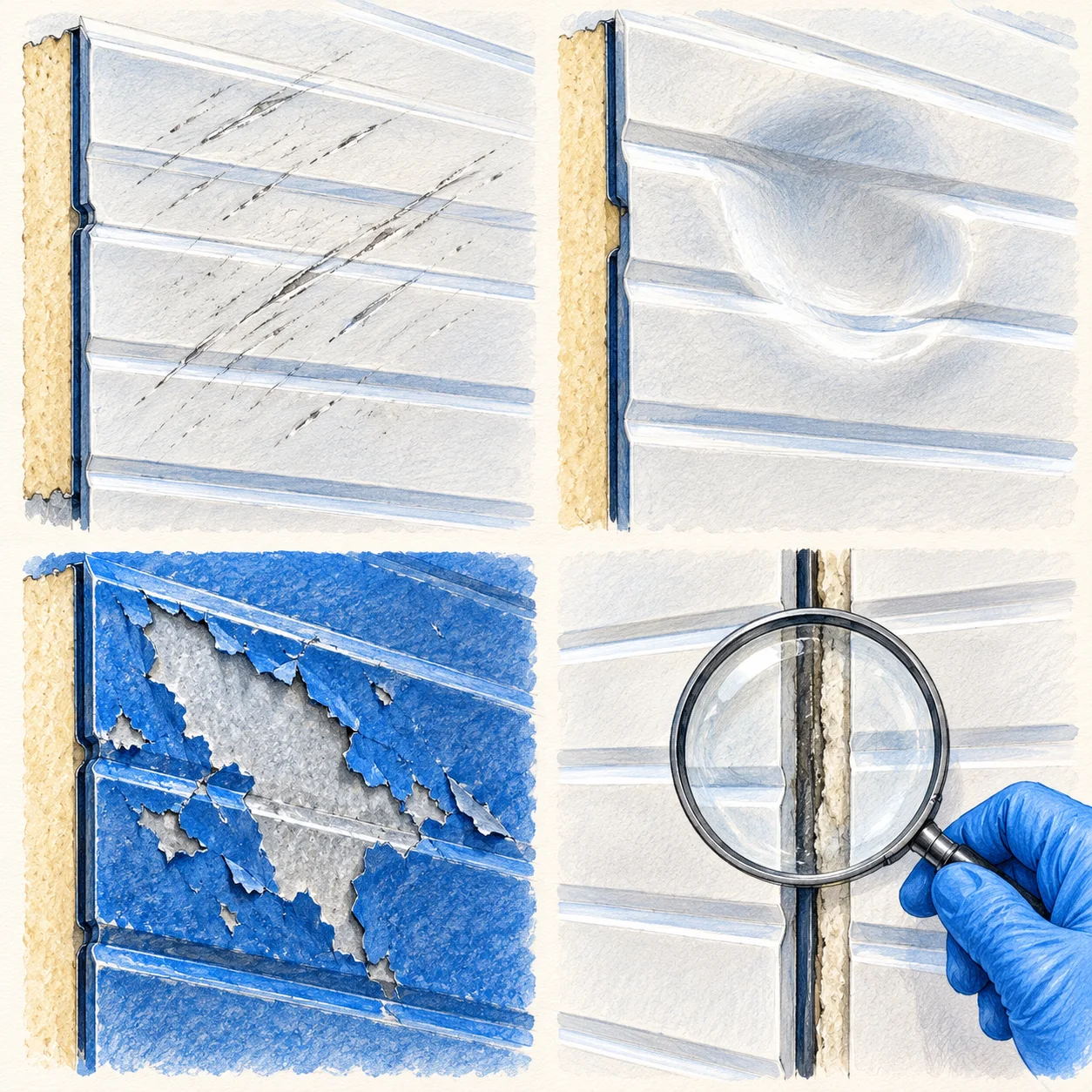
“The panel is ruined” does not yet say whether the problem concerns the paint, the shape of the sheet or a larger part of the element. A good enquiry starts with a simple description: scratch, chip, dent, bend, or several symptoms in the same place. You don’t need to know the technical term to contact Panel Cure+.
For example, you could write: “On three panels by the gate there are linear marks and one indentation; I don’t know the cause.” Such a description is more useful than an unconfirmed diagnosis of “damaged core”. If you have information about an impact or a previous repair, give it separately. The example shows how to report damage; it does not describe a job we have carried out.
2. Scratch: depth matters, not just length
The Kingspan instructions distinguish scratches that do not penetrate to the steel sheet from damage reaching that substrate. For shallow marks, they do not always indicate a need for touch-up painting, unless aesthetic requirements call for it. This is not a universal licence to leave every scratch without assessment.
In your enquiry, state whether you can see a colour change, a chip or bare metal. Do not check the depth with a blade and do not enlarge the mark. A photo may not show the coating layers clearly enough, so the absence of visible metal in a photo does not settle the condition of the surface. Preparing the enquiry should preserve the area as it is for the site survey, not change it before the assessment.
Source 23. Dent: show its shape and position
With a dent, we need a view of the indentation itself and the surrounding surface. Give its approximate length and width, and if you cannot measure it safely, note that these are estimates. State whether the mark crosses the profiling, reaches an edge or is located near a fixing.
Do not assume that painting will remove the change in shape. Whether a spot repair is possible is determined for each specific case. If torn sheet metal, delamination or the exposed interior of the panel is visible, mention this in your first message. It is a signal for a broader assessment, not a ready diagnosis. Do not attempt to straighten, heat or fill the dent before the scope is agreed: doing so changes the condition that is to be assessed.
4. Take photos that can be linked to each other
- Take a wide shot that makes it possible to find the damaged panel on site.
- Add a shot of the whole mark and a close-up showing the surface.
- If there is safe access, show the scale without covering the damage.
- For several areas, number the photos and add a short description to each.
- Keep the originals without filters or retouching; note the date they were taken.
This is a suggested set for an enquiry, not the manufacturer’s acceptance procedure. The Kingspan warranty certificate has separate guidelines for visual assessment, which take into account the observer’s position and the lighting. Do not confuse a photo that emphasises a detail with evidence that a warranty claim is justified. Avoid drawing conclusions about the extent of damage solely from a single strong light reflection.
Source 45. Why do we ask about the coating and the panel’s history?
Provide the product reference, colour, approximate age of the envelope and whether the area has been touched up before. If you have the delivery specification, an extract identifying the panel is enough; do not send confidential documents unrelated to the enquiry.
The GreenCoat instructions make the decision to repaint dependent on the condition and adhesion of the existing coating. They also point out that the appearance may differ after repainting. That is why the RAL number alone is not enough to promise a result. We establish the client’s expectations and discuss the limitations of the method before work starts. We do not present sample graphics or training photos as proof of repairing the same damage on a client’s building.
Source 36. What happens after you get in touch?
Panel Cure+ starts by checking the description and photos provided. We may need an additional shot, product data or a site survey. Only after screening can the proposed method, scope and terms of work be agreed. Reporting several similar marks does not mean they all require identical action.
Also state whether your priority is appearance before handover, removing the effects of a specific incident, or an assessment of older damage. Give the town, country and access conditions. This information helps prepare the next step without guesswork. If a warranty claim is in progress, tell us before any intervention. Choosing a solution is not an automatic confirmation of warranty rights or of the panel’s technical performance. Start with photos that show the problem together with its surroundings.
Sources and scope of information
Checked on 24 October 2026. Based on the sources listed below. This educational content was prepared by Panel Montage. The procedure depends on the specific panel, coating, damage and manufacturer’s recommendations. This article is not an individual repair assessment or an instruction for working at height.
- Balex Metal: panel maintenance and washing instructions, 31.01.2024
- Kingspan: installation guide, maintenance chapter; document listed on the manufacturer’s website as December 2025
- Ruukki / SSAB: maintenance of GreenCoat steel, April 2024
- Kingspan: warranty certificate and panel assessment guidelines, 11.12.2025, v5
Let’s start with photos
Show us the damage.
Let’s agree the next step.
Prepare a view of the whole panel, a close-up of the damage and the site location. If you know the manufacturer, coating type or RAL reference, add this information.
Prepare a repair enquiryTalk to the team